Special exhibition July - August - September 2012
In the period from about mid-July to about mid-September 2012, the Radio Museum hosted a special exhibition of devices from
Hella and Karl's (see the mention of Hella and Karl under the menu item "Elmshorn") large collection. The exhibition
focused on German radios from the "Third Reich" and radios from Germany on the other side of the "Iron Curtain".
|
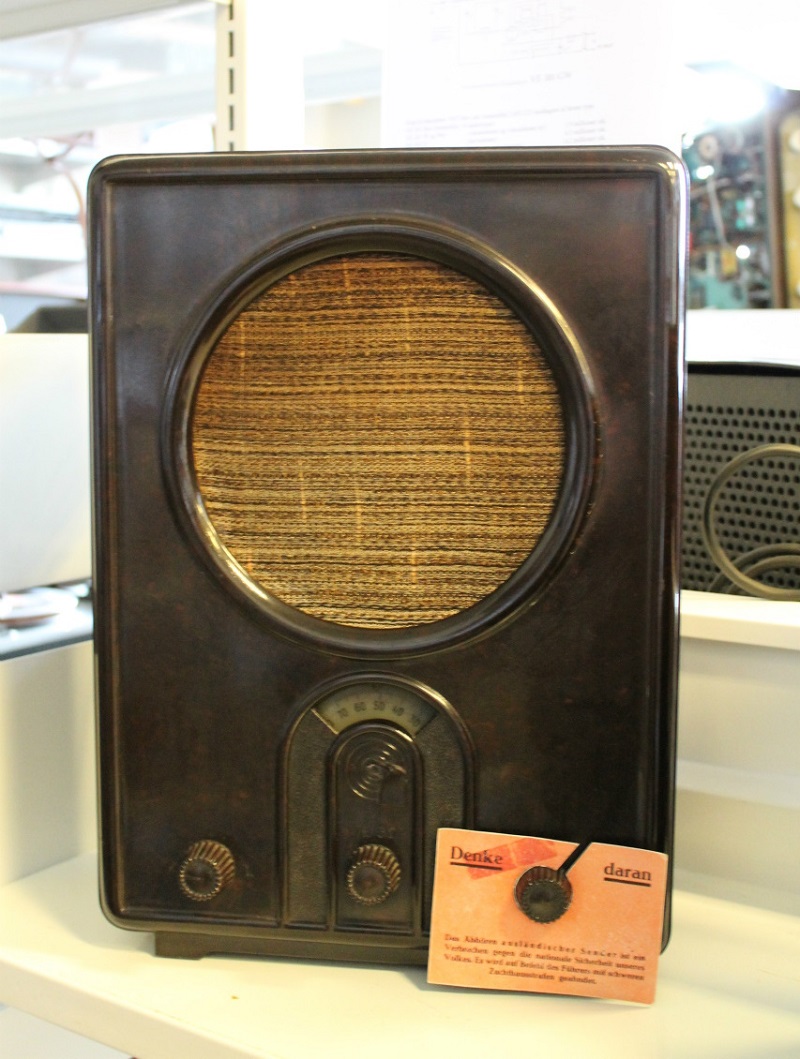
VE 301 with the small sign - "Denke daran"

"Denke daran" - a good example of how to keep a people in check with psychological terror
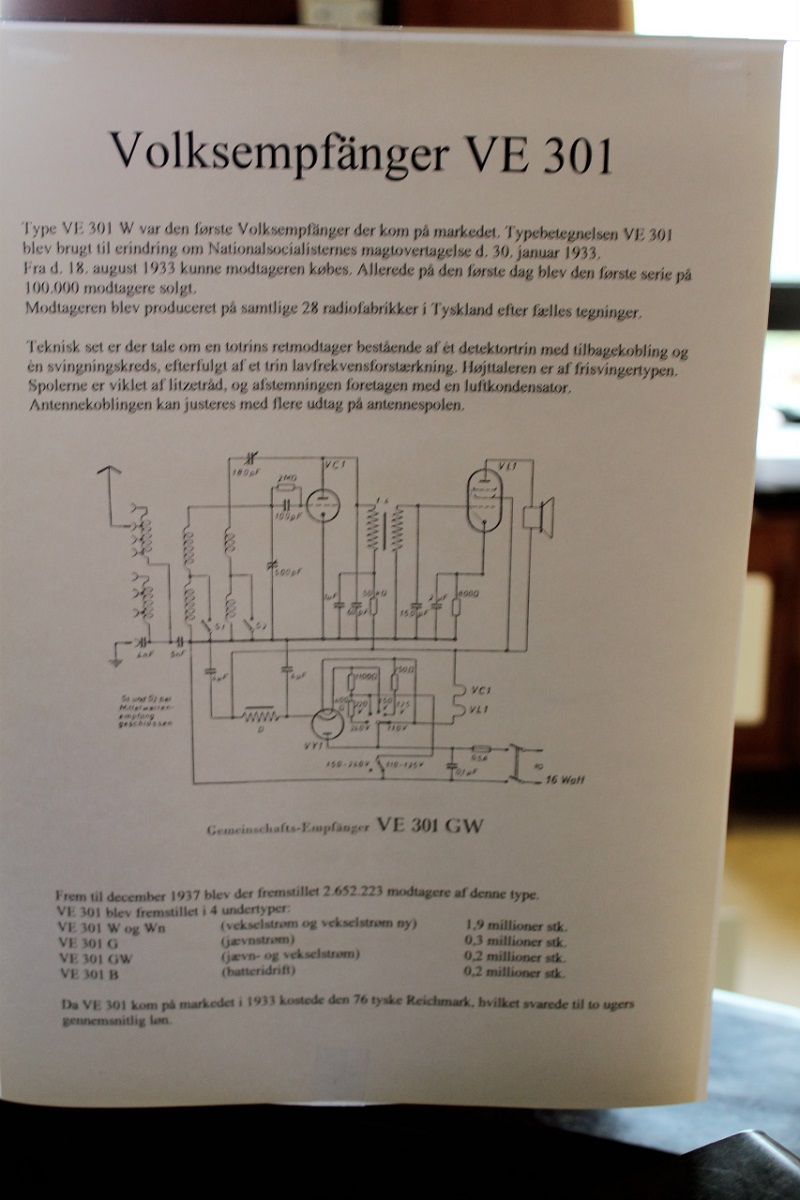
Diagram and description of VE 301
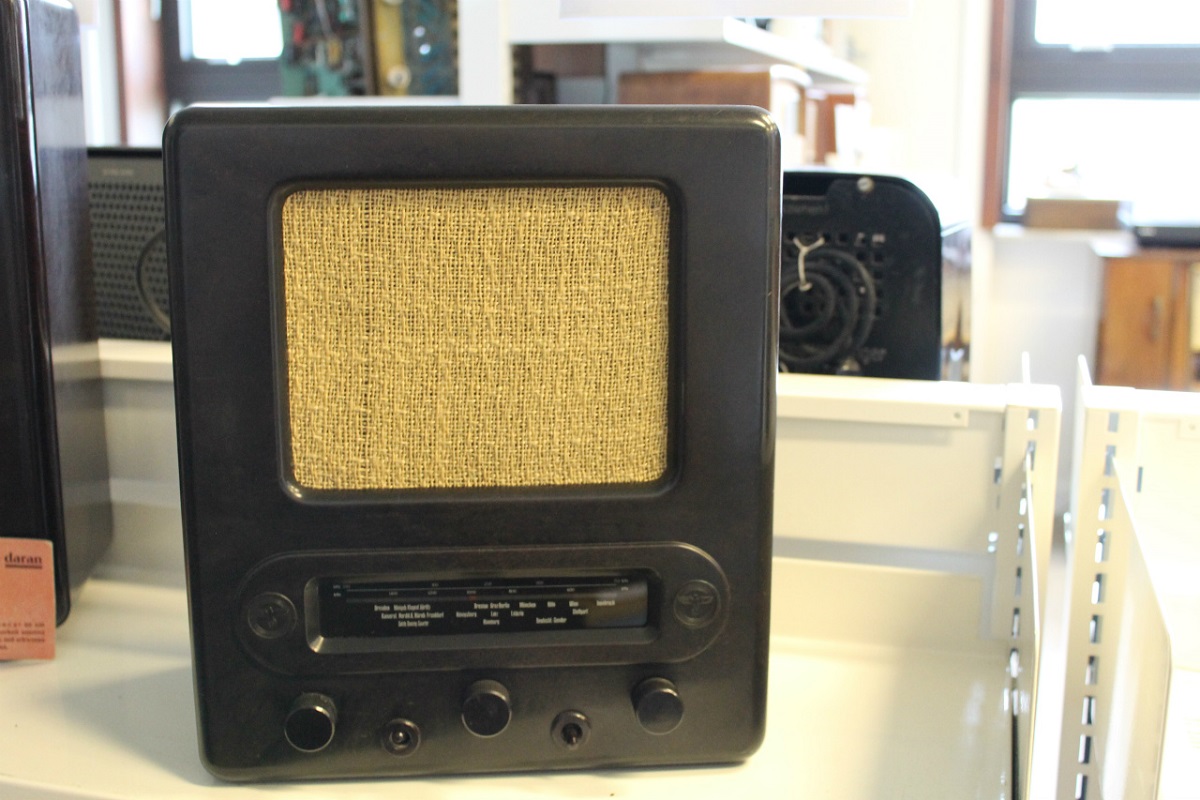
VE 301 Dyn with a changed appearance and with dynamic speaker

Diagram and description of VE 301 Dyn
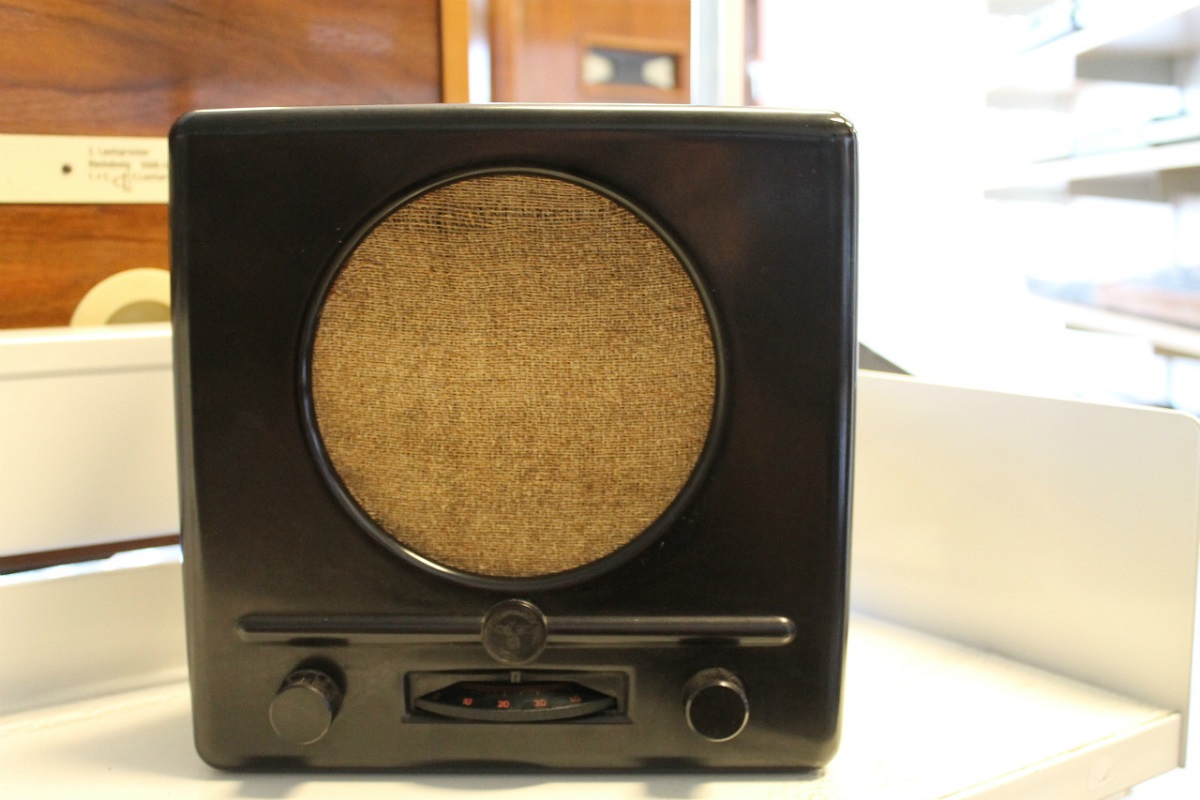
Der Deutsche Kleinempfänger DKE 1938 - "Göbbels Schnauze"

Diagram and description of DKE 1938
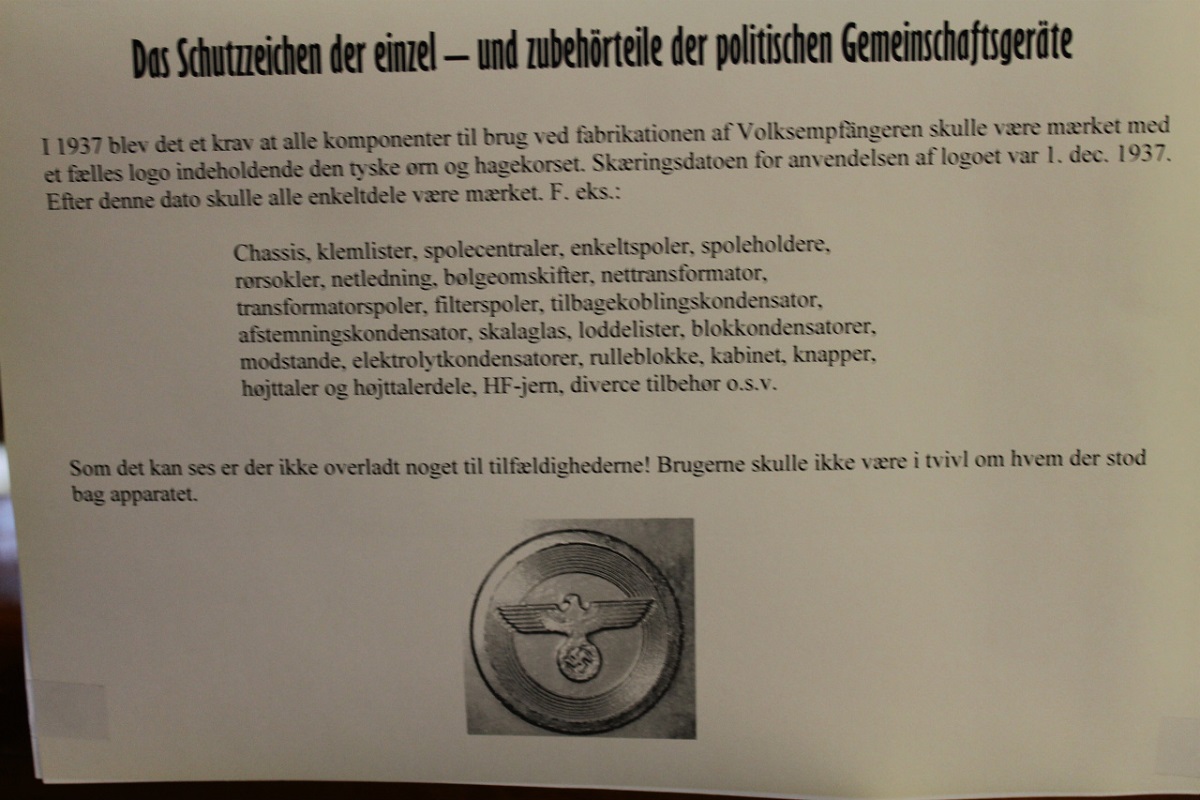
The requirement for marking devices and components with a swastika

The East Germans' answer to the Volksempfänger - RFT type 1U11 and Stern Radio Sonnenberg Super 675/55 GWU
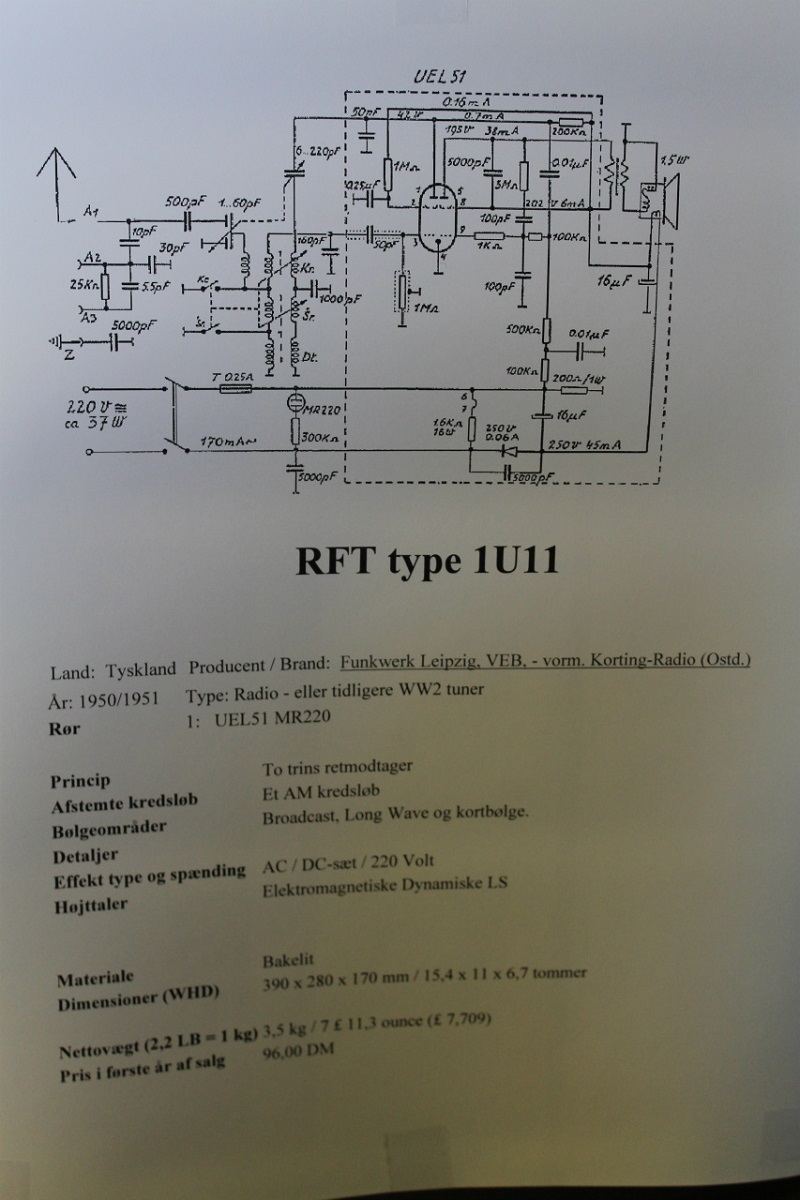
Diagram and description of RFT type 1U11
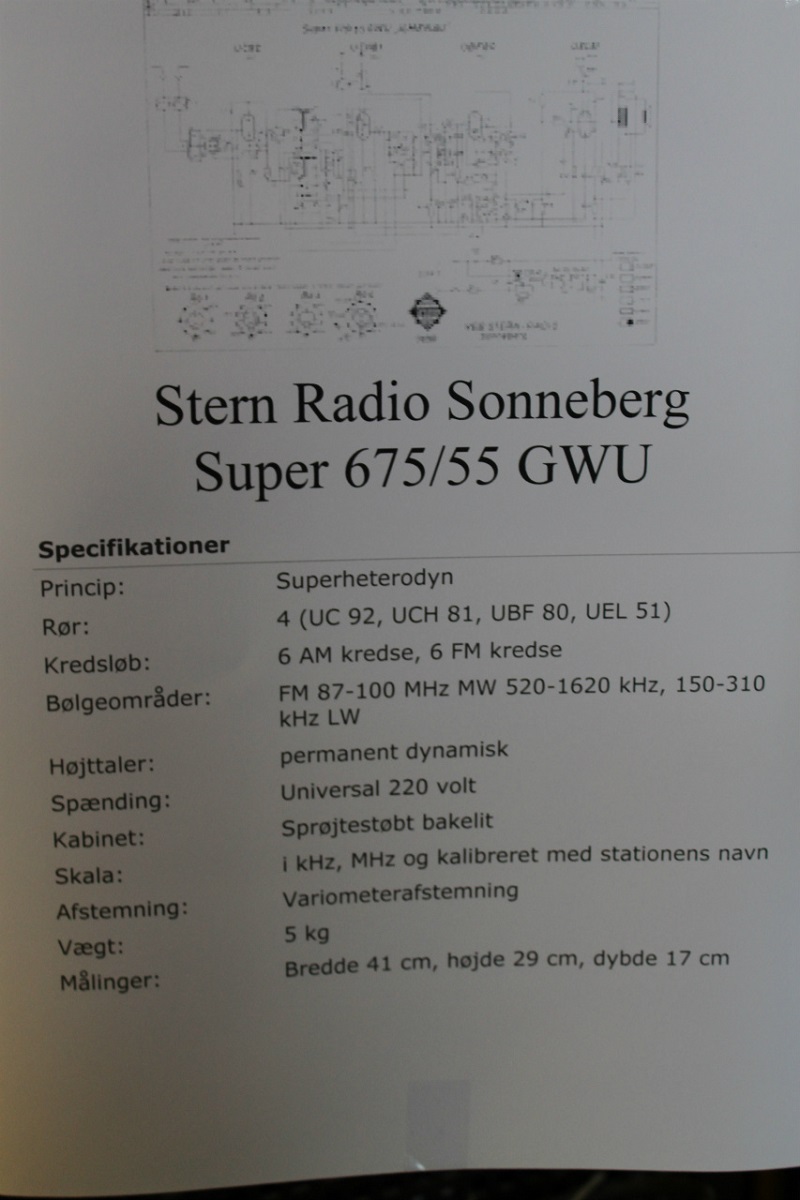
Diagram and description on Stern Radio Sonnenberg Super 675/55 GWU
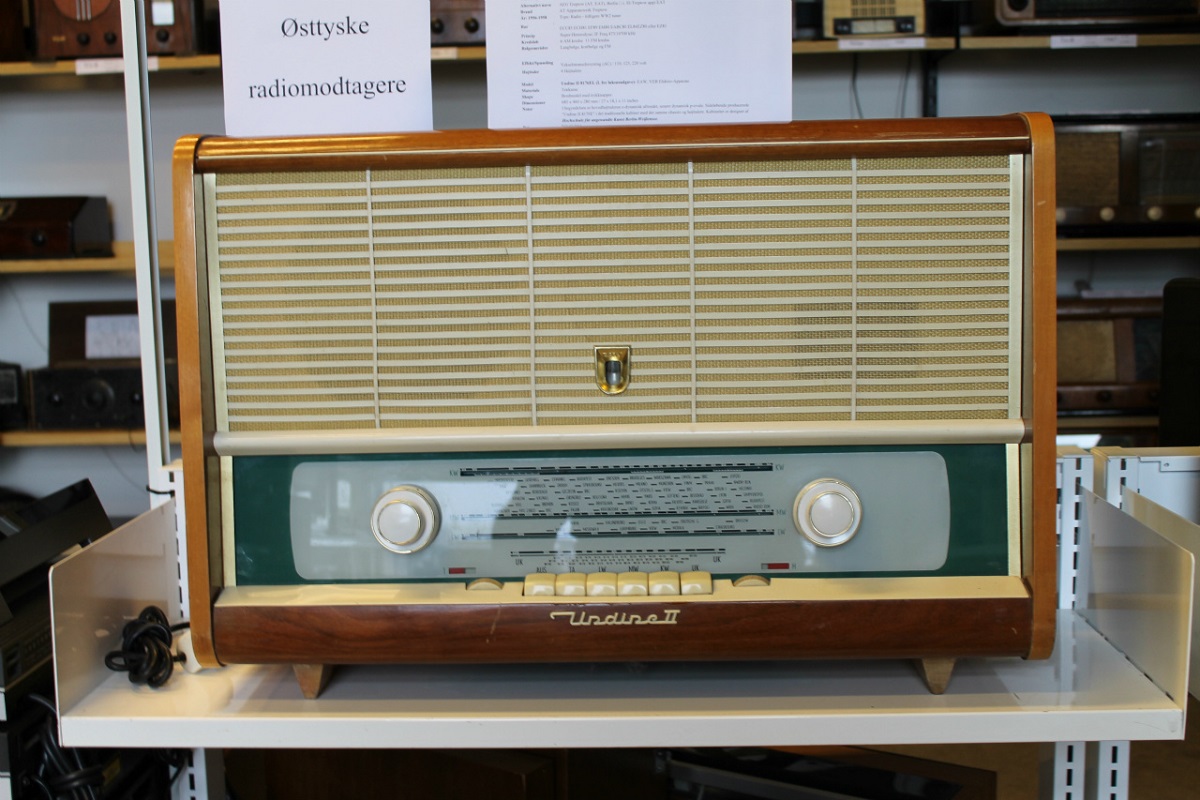
"Erich Honeckers Radio" Undine II 8176 EL
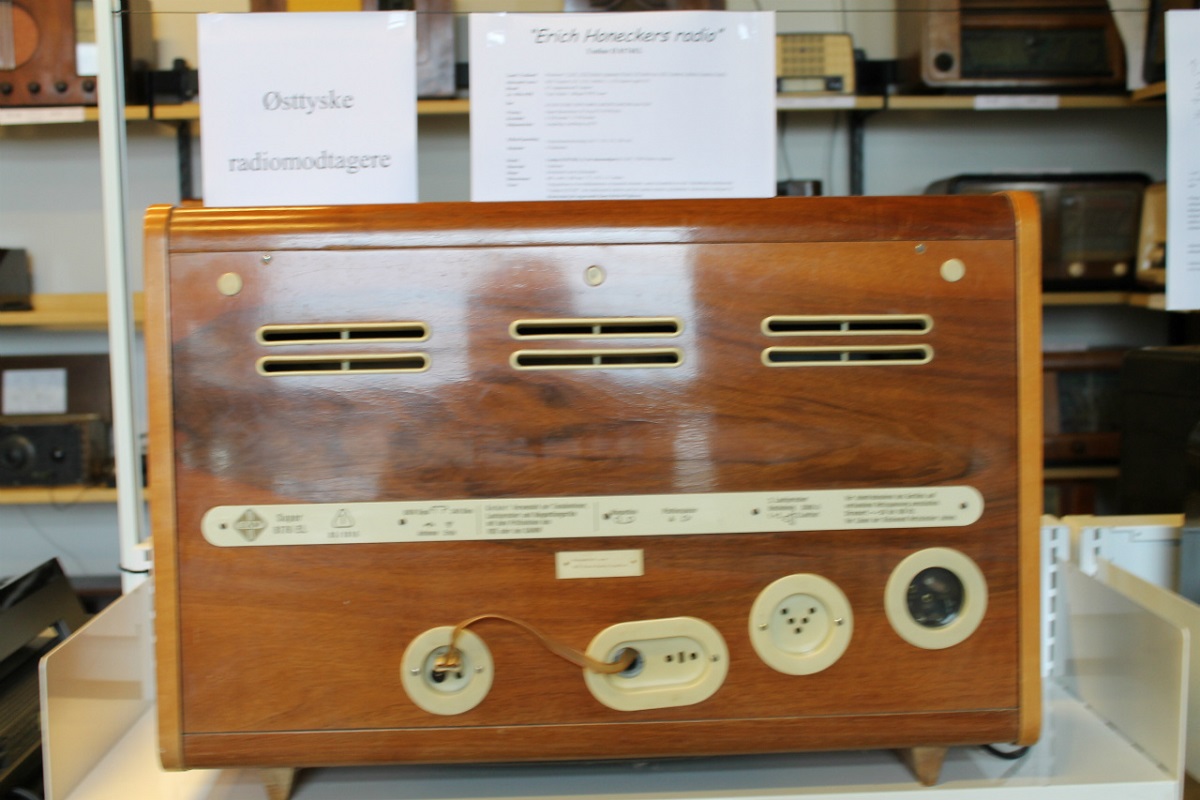
The back of "Erich Honecker's Radio". Even the back is made of varnished wood - nothing was too
good for the political elite
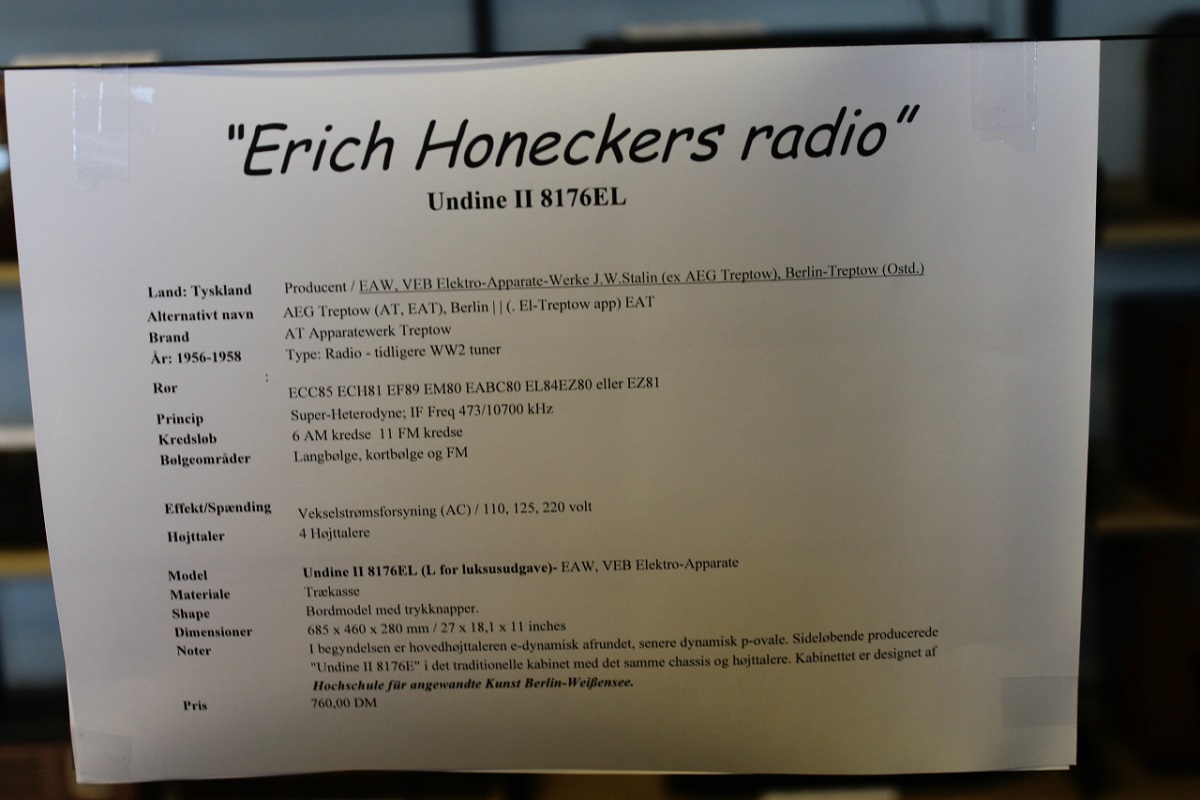
Description of "Erich Honecker's Radio"
|
1 / 14
VE 301 with the small sign - "Denke daran"
2 / 14
"Denke daran" - a good example of how to keep a people in check with psychological terror
The text translated into English:
"Remember"
Listening to foreign radio stations is a crime against the national security of our people.
It is punishable by severe prison sentences on the orders of the Führer.
The text translated into English:
"Remember"
Listening to foreign radio stations is a crime against the national security of our people.
It is punishable by severe prison sentences on the orders of the Führer.
3 / 14
Diagram and description of VE 301
4 / 14
VE 301 Dyn with a changed appearance and with dynamic speaker
5 / 14
Diagram and description of VE 301 Dyn
6 / 14
Der Deutsche Kleinempfänger DKE 1938 - "Göbbels Schnauze"
7 / 14
Diagram and description of DKE 1938
8 / 14
The requirement for marking devices and components with a swastika
9 / 14
The East Germans' answer to the Volksempfänger - RFT type 1U11 and Stern Radio Sonnenberg Super 675/55 GWU
10 / 14
Diagram and description of RFT type 1U11
11 / 14
Diagram and description on Stern Radio Sonnenberg Super 675/55 GWU
12 / 14
"Erich Honeckers Radio" Undine II 8176 EL
13 / 14
The back of "Erich Honecker's Radio". Even the back is made of varnished wood - nothing was
too good for the political elite
14 / 14
Description of "Erich Honecker's Radio"